Routes Spain Screen tourism route

When Hollywood moved to Madrid

In the late 1950s, a Russian-born producer who had emigrated to the United States decided he didn't need the studios of Los Angeles to make the biggest films ever shot. What he needed was Spain. This is what remains of that madness.

Before the great digital studios

Why this route will win you over

Samuel Bronston arrived in Spain in 1957 with barely any money of his own, but with one fixed idea: to build in Madrid what no Hollywood studio dared build in Los Angeles. In barely seven years, he raised imperial Peking on a patch of waste ground in Las Rozas, turned a Madrid country estate into the Rome of the Caesars, and transformed a medieval castle in the Sierra into the home of El Cid.

None of it was digital. Every column, every wall, every army of thousands of extras was real, built by hand by Spanish craftsmen who had never raised anything like it before. Today, most of those sets no longer exist — but the landscapes that surrounded them do. This route follows what's left: the real places where, for a handful of years, Madrid was the capital of the biggest cinema in the world.

The sets
Las Matas, Las Rozas
Imperial Peking and the Rome of the Caesars

Las Matas (Las Rozas)

Las Matas, Las Rozas de Madrid

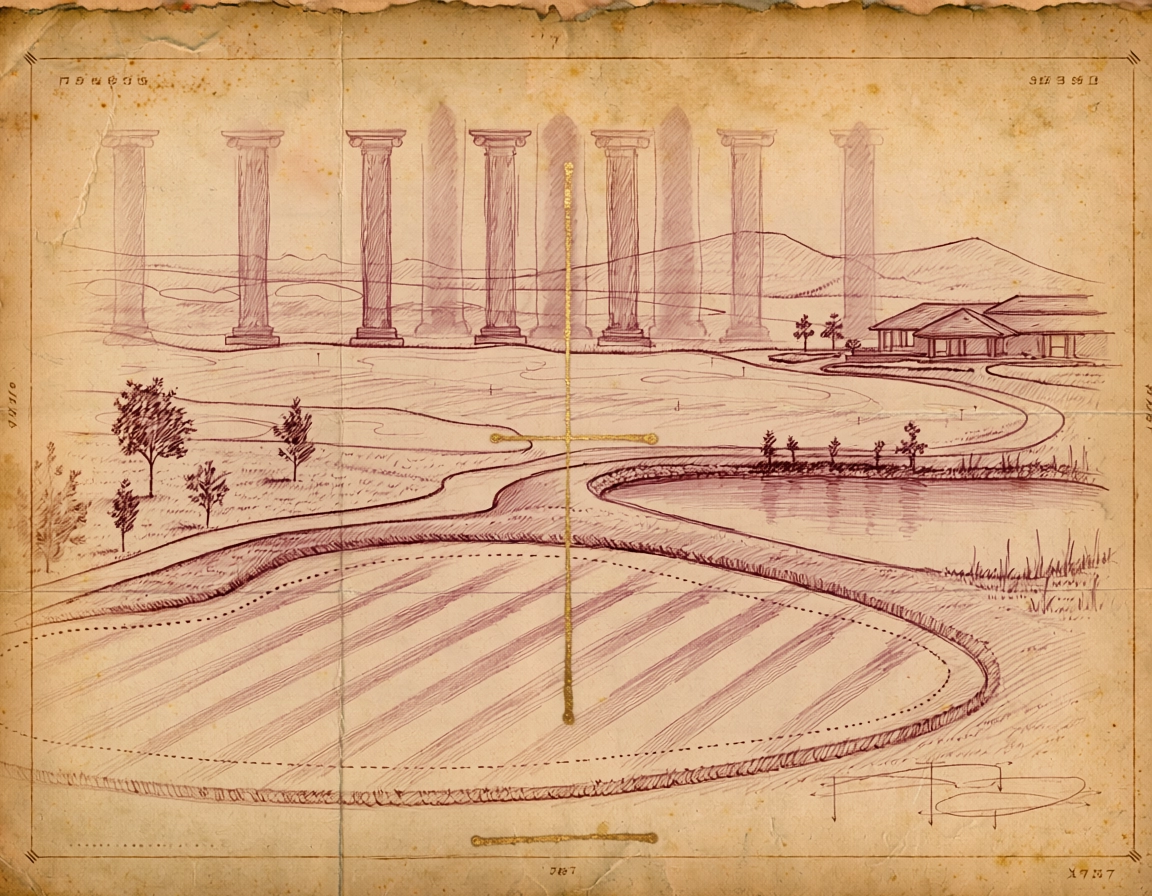
On a stretch of rustic land leased from the Marquis of Villabrágima, 25 kilometres from Madrid, Bronston spent three months building a papier-mâché Peking three times the size of anything Hollywood had ever produced — a regular fixture in the official NO-DO newsreels of the time.

On that same plot, a Roman forum was later raised, larger than any ever built for a film, with grounds to enter the Guinness Book of Records. Today a residential estate with a golf course stands there instead — not a trace of the set remains, but the sheer fact that an entire empire once fit here is still hard to believe.
Manzanares el Real Castle
El Cid's castle

Castillo de los Mendoza, Manzanares el Real

Manzanares el Real, Madrid

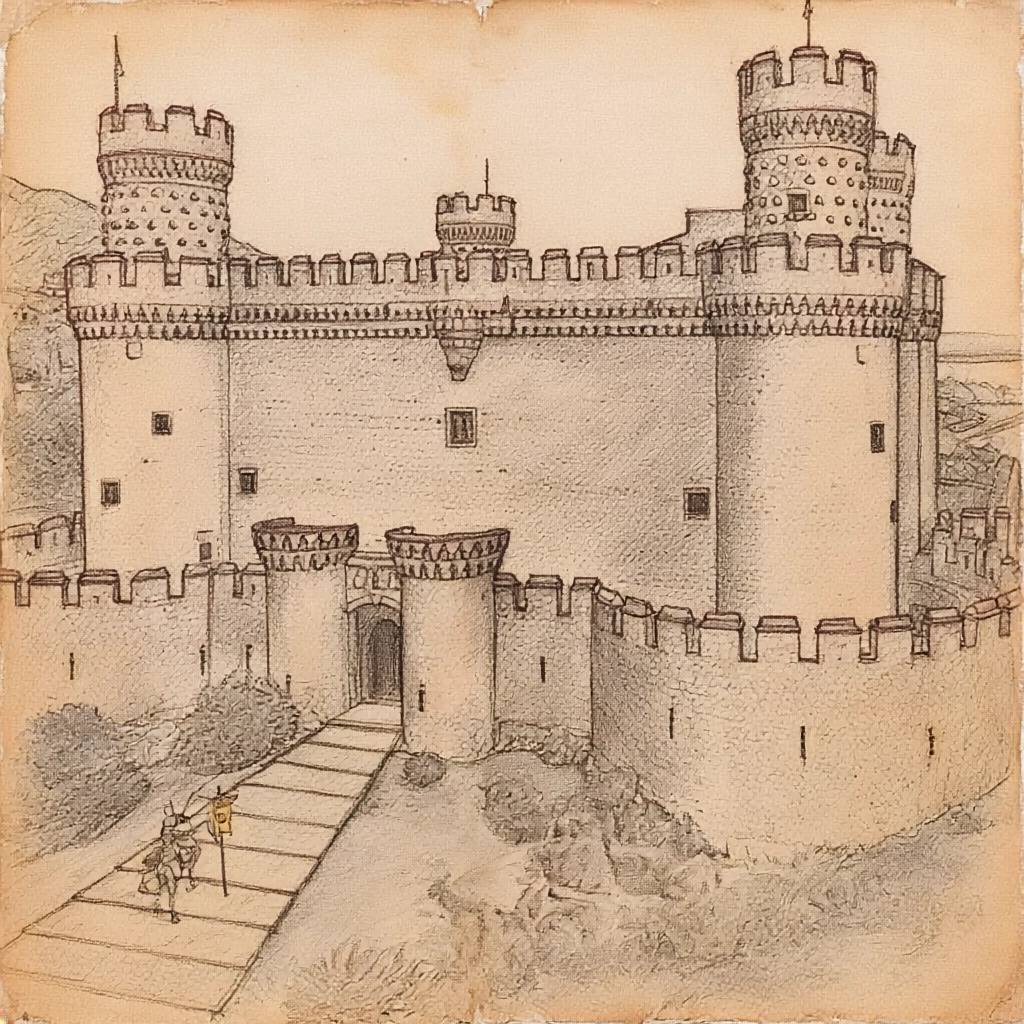
This 15th-century castle, with the Sierra de Guadarrama as a backdrop, was the on-screen home of Rodrigo Díaz de Vivar. Charlton Heston and Sofia Loren filmed here under Anthony Mann's direction, with Babieca — El Cid's horse — becoming something of a local legend in his own right.

A few metres away, in the spot known as "El Rodaje", the same crew also recreated Nazareth for another of Bronston's major productions that same year — two different films, shot almost in the same place, only a few months apart.

Chinchón Main Square
Bronston's last major production in Spain

Chinchón's Plaza Mayor

Chinchón, Madrid

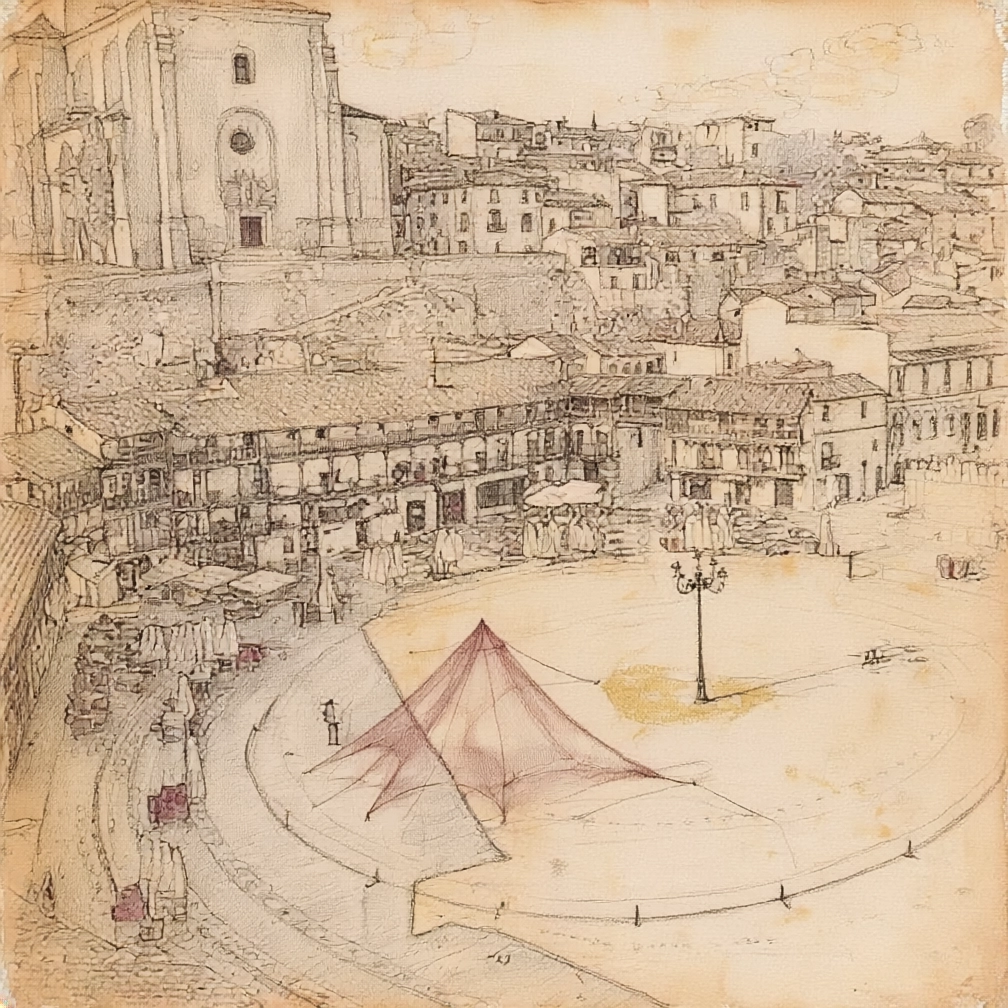
This 17th-century arcaded square, with its 234 green balconies, became a circus ring for Circus World (1964), starring John Wayne, Rita Hayworth, and Claudia Cardinale — the last film Bronston would shoot in Spain before his empire began to crumble.

Ermita de los Remedios, Colmenar Viejo
The monastery of San Pedro de Cardeña

Ermita de los Remedios, Colmenar Viejo

Colmenar Viejo, Madrid

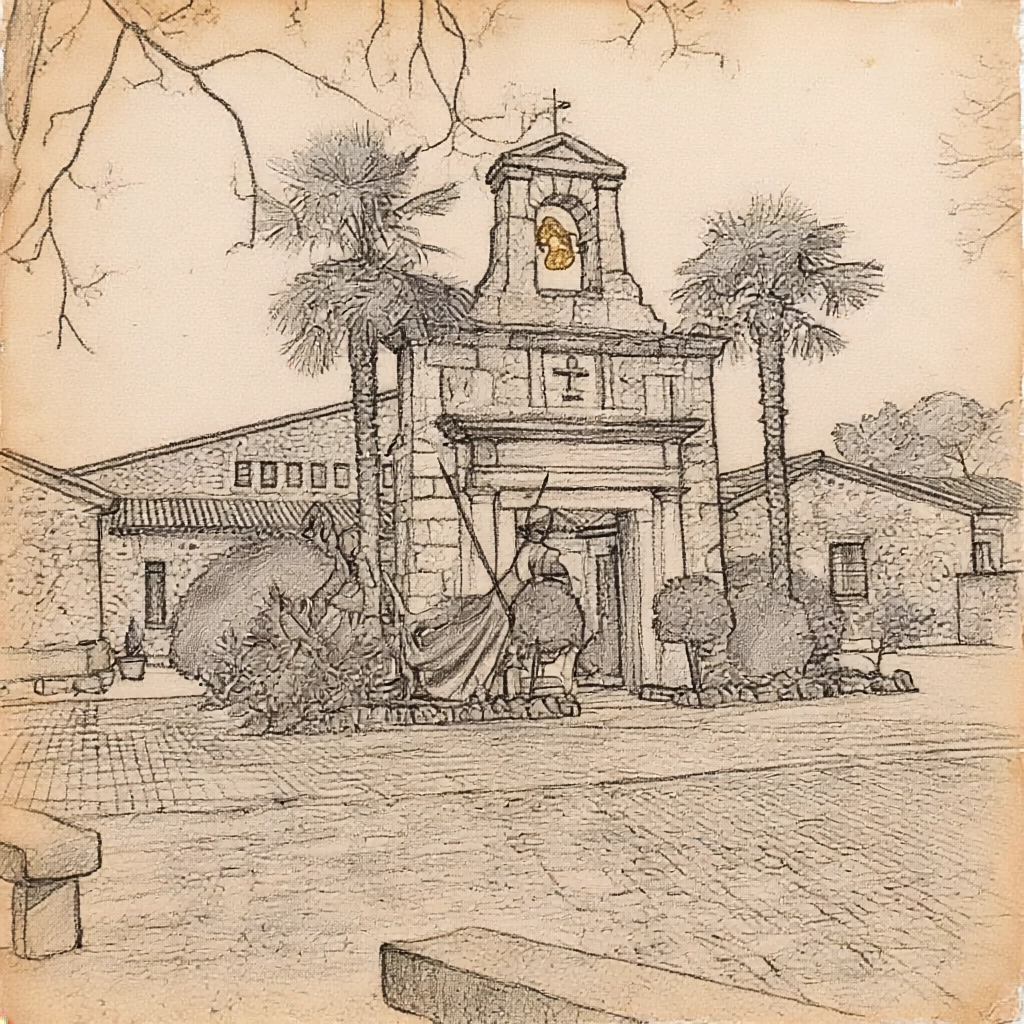
This small hermitage stood in for the monastery of San Pedro de Cardeña in El Cid, the setting for Rodrigo and Jimena's reunion. The whole northern stretch of the region — Colmenar Viejo, La Cabrera, Navacerrada — became an open-air set for the film's battles and equestrian scenes.

My father worked as a plasterer on all those sets.

A Las Rozas resident's recollection Son of one of the craftsmen who built Bronston's sets.

The golden age

The films of this route

1961

El Cid

Charlton Heston and Sofia Loren, directed by Anthony Mann.

View on TMDB
1961

King of Kings

With Carmen Sevilla as Mary Magdalene, directed by Nicholas Ray.

View on TMDB
1963

55 Days at Peking

Charlton Heston, Ava Gardner, and David Niven, on the largest set ever built in Spain.

View on TMDB
1964

The Fall of the Roman Empire

With Sofia Loren and Stephen Boyd; its Roman forum entered the Guinness Book of Records.

View on TMDB
1964

Circus World

John Wayne, Rita Hayworth, and Claudia Cardinale; Bronston's last major Spanish production.

View on TMDB
Curiosities

A few small big stories

01

The Roman forum Bronston built at Las Matas for The Fall of the Roman Empire was so enormous it earned its own entry in the Guinness Book of Records as the largest film set ever built — bigger than the real Roman forum. Thousands of extras, columns several storeys tall, and not a single computer-generated frame: it was all stone, wood, and plaster, built by hand by craftsmen who had never raised anything like it and probably never did again.

02

Director Nicholas Ray suffered a heart attack in the middle of filming 55 Days at Peking, and had to leave the picture unfinished — other directors completed the work uncredited. The ripple effect of that heart attack reached further than anyone expected: Ray had also been assigned to direct Circus World, a project that passed first to Frank Capra (who left over disagreements with John Wayne) and finally ended up in the hands of Henry Hathaway. A single health crisis, in the middle of a shoot in Madrid, reshuffled the fate of two entirely different films.

03

Ava Gardner, co-star of 55 Days at Peking, had a reputation for arriving late to set after nights out in the Madrid of the era — sometimes still drunk, and without having learned that day's lines. The delays piled onto an already difficult shoot, with her own director suffering a heart attack in the middle of it; between Gardner's disorder and Ray's health, the production became one of the most chaotic of the entire Bronston era.

04

At his peak, Bronston managed to shoot two epics a year with the same Hollywood stars — a pace no Los Angeles studio could match at the time. But that same dizzying speed was also his undoing: the commercial failure of The Fall of the Roman Empire and Circus World, released almost back to back in 1964, triggered his production company's bankruptcy that same year. The empire he had built stone by stone in Madrid collapsed almost as fast as it had gone up.

Know any other Samuel Bronston production locations, or an interesting story of your own?

Share it in the forum
Now you know the story

Now, go and walk it

Turn-by-turn navigation through every location of Spanish Hollywood's golden age, straight from Moovle App.

Open route in the App